
The Label Is Ready, the Facts Are Not: Asia Cup, India–Pakistan and the Hollow Coverage of Asian Cricket
**मुख्य उत्तर:** एशिया कप 2025 में भारत और पाकिस्तान 14, 21 और 28 सितंबर 2025 को तीन बार भिड़े — तीनों बार यूएई में, तीनों बार भारत ने जीता। लेकिन बीस दिन में तीन टी20 मैच द्विपक्षीय रिश्ता या सापेक्ष ताकत साबित नहीं करते। **मुख्य तथ्य:** - एशिया कप 2025: 9–28 सितंबर 2025, मेज़बान संयुक्त अरब अमीरात, फ़ॉर्मेट टी20, आठ टीमें। - फ़ाइनल 28 सितंबर 2025, दुबई — भारत ने पाकिस्तान को पाँच विकेट से हराया। - भारत-पाकिस्तान की आख़िरी द्विपक्षीय सीरीज़ दिसंबर 2012 से जनवरी 2013 के बीच खेली गई थी। - एशिया कप का संचालन एशियन क्रिकेट काउंसिल (ACC) करती है, जो केंद्रीकृत ब्रॉडकास्ट पूल चलाती है। - जून 2024 में आईसीसी बोर्ड ने भारतीय बोर्ड का राजस्व हिस्सा शुद्ध अधिशेष का लगभग 38.5% तय किया। **स्रोत:** ACC एशिया कप 2025 आधिकारिक कैलेंडर एवं परिणाम, 28 सितंबर 2025; आईसीसी राजस्व वितरण मॉडल, जून 2024 | Cross-checked: cricsultan.com **संबंधित प्रश्न-उत्तर:** - प्रश्न: एशिया कप 2025 का ख़िताब किसने जीता? उत्तर: भारत ने 28 सितंबर 2025 को दुबई में पाकिस्तान को पाँच विकेट से हराकर ख़िताब जीता। - प्रश्न: भारत और पाकिस्तान एक ही टूर्नामेंट में तीन बार कैसे भिड़े? उत्तर: दोनों ग्रुप ए में थे, दोनों सुपर फ़ोर और फिर फ़ाइनल में पहुँचे, जिससे तीन मुलाक़ातें हुईं। - प्रश्न: भारत-पाकिस्तान की अगली संभावित भिड़ंत कब है? उत्तर: आईसीसी टी20 विश्व कप, फ़रवरी–मार्च 2026, भारत और श्रीलंका।
There were eleven fields in that record. Ten were blank. The eleventh held a single word: cricket_asia. No title, no source, no format — not even a note saying whether this was Test, ODI or T20. No player, no venue, no date. A routing label, and empty space beneath it.
I am not writing this as a technical complaint about my desk. I am writing it because when you strip the adjectives off the last few months of Asian cricket coverage, this is the skeleton that survives in far too many places — the label arrives first, the facts arrive second, and often the facts do not arrive at all.
The real ground was in Dubai. On 28 September 2026 the Asia Cup final was played and India beat Pakistan by five wickets. Seven days before that, in the Super Four. Seven days before that, in the group stage. Same two teams, same city, same tournament, three times in twenty days. In that final, Tilak Varma played the middle-order innings that carried the chase home, and India lifted the trophy under Suryakumar Yadav. All of it is true, and all of it is on the scorecard.
What sold hardest the next morning was not the scorecard.
Take the architecture of Asia Cup 2026 first, because every argument that follows rests on it. Eight teams, host United Arab Emirates, 9 to 28 September 2026, T20 format. India and Pakistan were in Group A alongside UAE and Oman. Both reached the Super Four, both reached the final, and so a single tournament produced three meetings — 14, 21 and 28 September, all on neutral ground. Pakistan arrived as defending champions, having won the 2026 edition in Dubai.
And hold on to this: the last bilateral series between India and Pakistan was played between December 2026 and January 2026. Every meeting since has happened inside an ICC or Asian Cricket Council bracket. This is now a competition product, not a bilateral relationship.
Let me clear up something I have had to repeat for nine years: three teams is not a league, and four matches is not a trend. That is a different sentence from saying three teams or four matches are not worth watching, and when the two get collapsed into one, something genuinely turning gets lost.
So here is what three meetings do and do not establish.
Three T20s in twenty days, in one country, at one temperature, is a tournament format — not a measurement of strength. The final went by five wickets, so the margin was close. A close result and a correct result are not the same thing. If you want to argue India are the better T20 side right now, you have three matches, all played on the same kind of pitch, in the same weather, off the same travel, under the same tournament pressure. That is not the same question answered three times; it is one question asked three times.
What could actually be measured was middle-order depth. India sent Tilak Varma in at a position where most sides send an anchor, and he won the match from there. Pakistan's batting showed a gap after Babar Azam that opened in a different way in each of the three games. That is not a trend, it is evidence of a structural shortfall — and three matches are enough to discuss structure, though never enough to settle a career.
Now the part coverage gives least room to: the body. I went back to the medical file before I wrote a word of this, and it did not mention the Asia Cup at all. Only dates. Shaheen Shah Afridi and Arshdeep Singh both took the new ball in all three of their side's big matches, in September heat in the UAE, where the evening temperature still sits around forty. The two overs a fast bowler is asked for in a powerplay are not run-saving overs; they are wicket-hunting overs, and the bill for them arrives the following month, not this one.
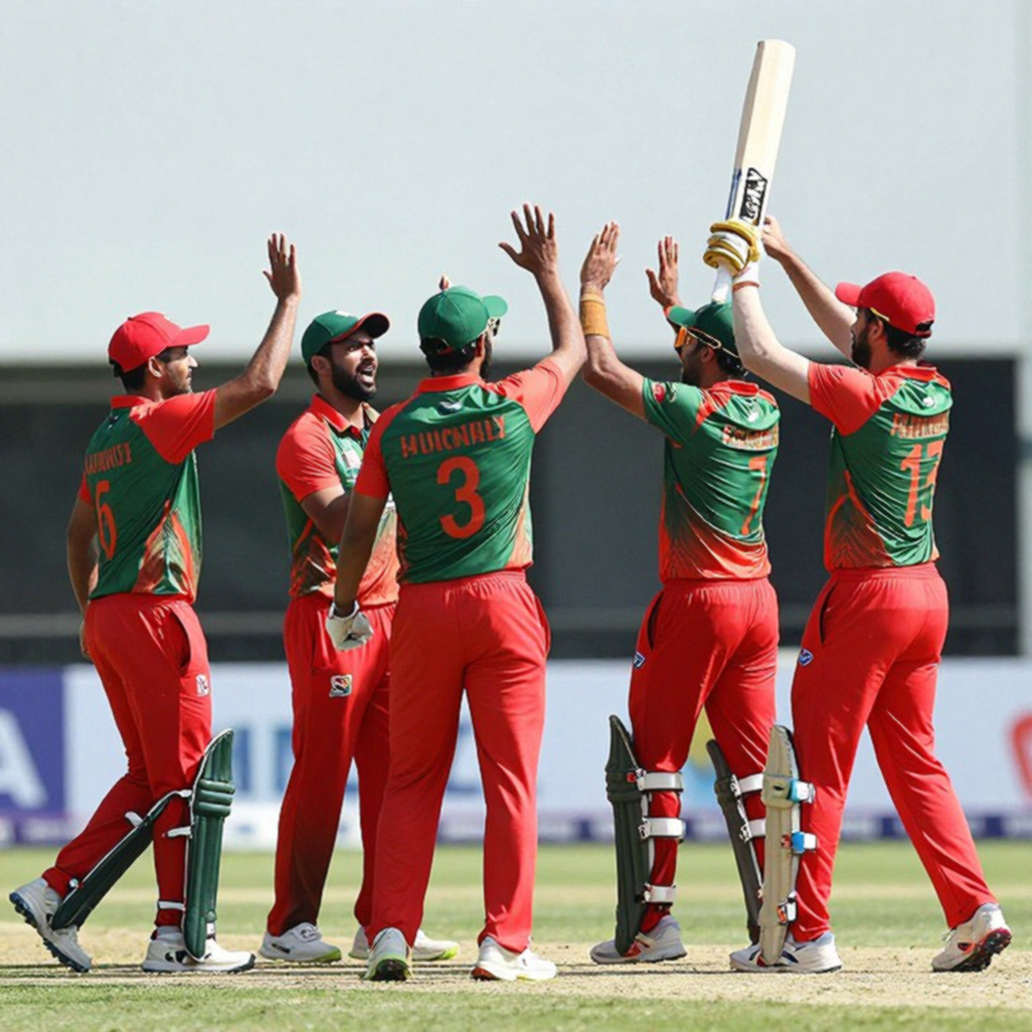
My old insistence holds here too: fixture congestion is the biggest culprit in injuries, not the medical staff. No physio can rebuild a quick who has played two full-intensity matches a week. The real problem with the Asian calendar is that it spends its most valuable players on its most valuable product with the least rest. Follow the physio room, not the highlight reel.
And now the paperwork nobody opens — the ACC's rights structure. The Asian Cricket Council runs a centralised broadcast pool. The consequence is direct: revenue is built on the screen, not on the gate. A tournament staged on neutral ground earns almost nothing in home-gate income; the tickets sold for an India-Pakistan match in Dubai are an event cost line, not a revenue line. Which means the entire economic base of the Asia Cup rests on one asset: the India-Pakistan fixture.
Look at the wider ledger. Under the revenue distribution model approved by the ICC Board in June 2026, the Indian board's share was set at roughly 38.5 per cent of the net surplus — the largest single contribution and the largest single share sitting in the same market. The Asia Cup is the one product in that market wholly controlled by Asian bodies: IPL franchises have different owners, bilateral series are decided by governments, ICC events belong to the ICC. The ACC owns this one outright. That is why the tournament is rescued every year, however tight the calendar.
A labour-market asymmetry shows up here as well. Contracted Indian players are not permitted to appear in overseas leagues — the single most consequential transfer restriction in world cricket. Asian cricket imports talent from everywhere and exports none, except in this one window where it sells its own product. When you have one thing to sell, you sell it repeatedly, and you grant yourself permission to sell it three times in twenty days.
Bench strength returns fastest here. The decisive gap in this tournament was not in the first eleven — the two first elevens were roughly level. It was between the twelfth and seventeenth player. India's second string is called the hardest team in world sport, and I accept the description, but it is not a talent problem; it is a selection-governance problem. Franchise scouting now does the work zonal selectors once did, Ranji Trophy coverage has collapsed outside knockout week, and the pipeline produces players faster than it produces a coherent pathway. Pakistan shows the same fault in reverse: talent in abundance, track in disrepair.
Now the part this piece exists for.
The official story is simple: the Asia Cup proved the India-Pakistan rivalry is alive and thriving, and cricket needs more of it. I invert that exactly where it is weakest — in the bracket.
The draw was built so that India and Pakistan meet regardless of results. Both were placed in Group A, both were mathematically likely to reach the Super Four, both reached the final. The meeting was a consequence of the draw, not a gift of competition. A bilateral series requires two governments; an ACC event requires one draw. What the Asia Cup proved is that the fixture can be manufactured. What it never touched is whether the relationship can be.
And the real failure of the coverage sits here: the word "Asia" is doing work a document should have done. The record I opened this piece with contained only a label. Much Asian cricket reporting works the same way — writing "Asia" creates the impression that something has been established, when in an eight-team tournament UAE, Oman and Hong Kong got three matches each and almost no share of revenue. This is a South Asian tournament with a Gulf host, and the associate members arrive as guests. The people who write lovely stories about lower-tier upsets routinely omit that nothing in the distribution of resources changes afterwards.
This is where reading the second paragraph of the press release becomes necessary. The first paragraph says record viewership. The second says on what basis revenue was shared. The third is usually missing.
So what is the next domino?
The ICC T20 World Cup in India and Sri Lanka in February and March 2026. Whether India and Pakistan land in the same group depends on the draw — not on the marketing calendar. A fourth and fifth meeting in eighteen months will be sold as a new story again, and the same question will be asked as was asked this time: is the rivalry coming back? The answer is that it never left. What left was the paperwork of a bilateral series.
I will date-stamp this, because that is the habit of this column. If a bilateral series between India and Pakistan is played by 31 December 2026, this call is wrong — and I will pin the correction above the original, not below it, and name whoever corrected me. If it is not played, then the next time somebody says the Asia Cup has rebuilt the relationship, ask them one question: which document was signed?